

We are currently working on a special project where, alongside our usual quality standards, project schedules, and client requirements, the specific conditions of the working environment play a crucial role in the successful implementation of the works.
The construction of the telecommunications network is being carried out in the Gothmund area of Lübeck. It is precisely the unique character of Gothmund that gives this project its special significance.
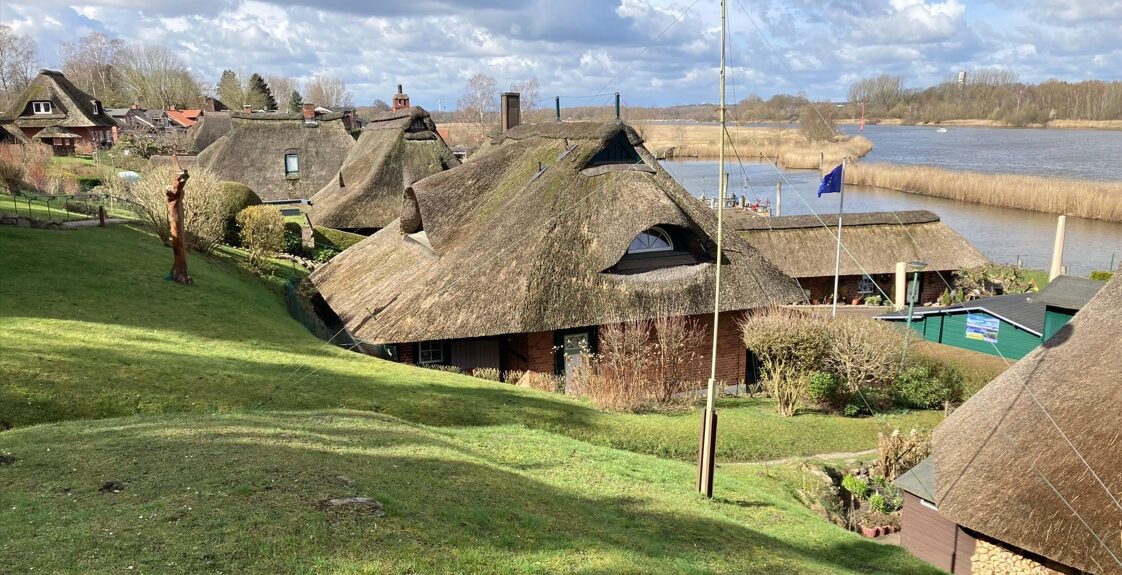
Gothmund is a historic fishing village located on the River Trave near Lübeck. First mentioned in historical records in 1502, the settlement has preserved its distinctive character as a fishing village over the centuries. Gothmund is known for its traditional fishermen’s houses with thatched roofs, its small harbour, and its historic buildings, some of which are protected cultural heritage monuments.
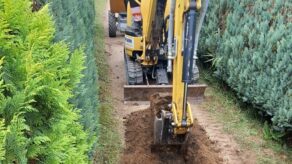
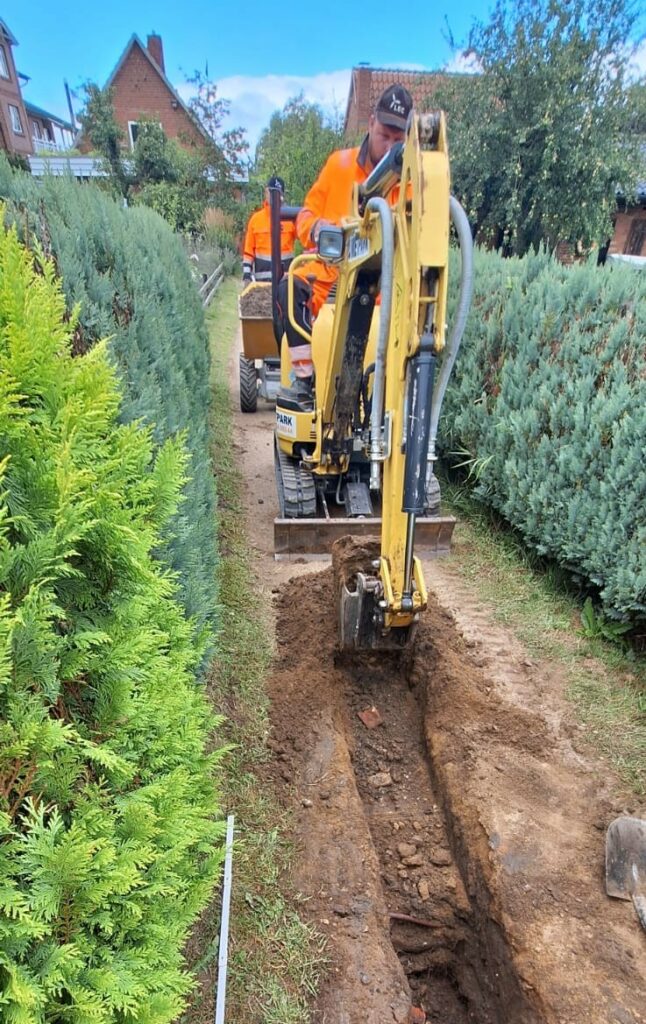
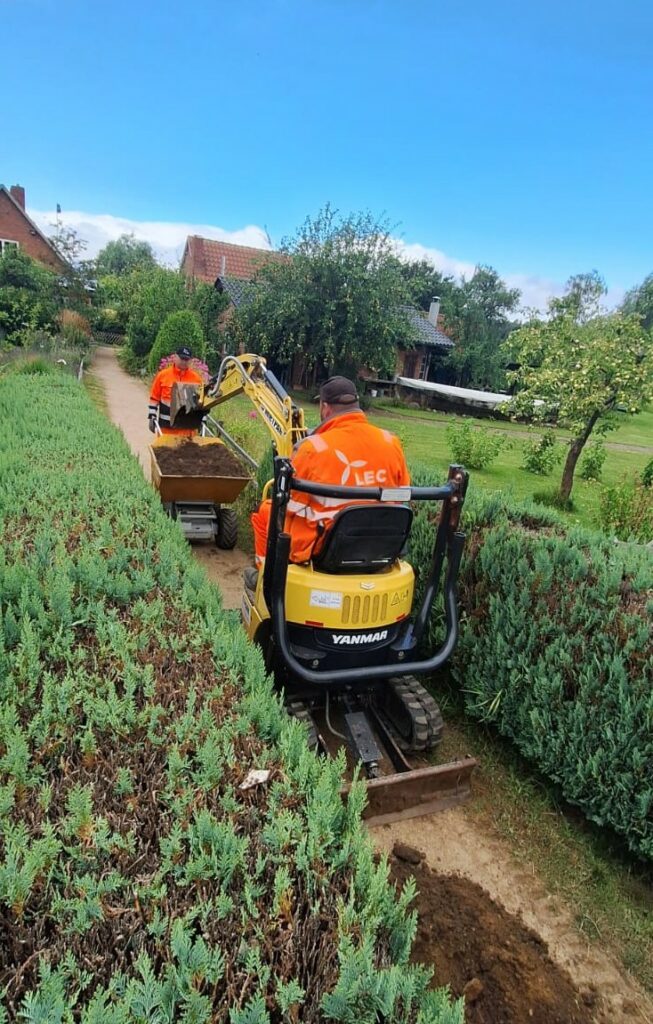
This historic environment directly influences the working methods and approach used on site. Limited access routes, existing buildings, and the specific characteristics of the area require careful work planning and a targeted selection of equipment. Large-scale machinery is not suitable for this location, meaning that most of the construction works are carried out manually, supported by compact equipment. With a little imagination, some of the machinery used could even resemble miniature toy construction vehicles. Mini excavators and electric mini dumpers are used to ensure efficient operations in confined spaces while maintaining the required precision and protecting the surrounding environment.
This project demonstrates that modern infrastructure development can successfully coexist with a historic environment. The successful implementation of such solutions depends not only on technical requirements but also on the ability to respect the character of the location, its historic buildings, and the values of the surrounding landscape. It also highlights that carrying out works under such unique conditions requires technical expertise, precision, and the ability to adapt to the specific requirements of each individual site.
Video:
https://youtu.be/mj9w3tPLZiI